|
|
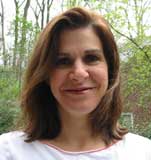
The Paideia School in Atlanta, Georgia, runs an innovative program to help their middle school students become better writers, with an added bonus: it also helps them become better people. How? By focusing their writing on personal essays. One of the teachers who helps shape this course is Andrea Sarvady, a talented educator with a unique background -- she's also an accomplished author and trained therapist. We spoke to Andrea about the program:
Continue reading...
Click here to read more articles from Teachers at Work.
Mention MySpace
and other online "social networks" to educators and parents and you'll likely get a reaction worthy of Edvard Munch's The Scream. Take a peek at the Internet-style spelling and grammar on these sites and you might belt out a shriek yourself. But not so fast, says an educator named Joe Bellacero. A veteran New York City English teacher, Joe is now the associate director of The New York City Writing Project, a professional development organization that stresses teachers teaching teachers. As you can imagine, he knows a thing or two about the language arts. Joe explains why he thinks popular social networks might just be a boon for students -- and how teachers can tap their hidden value.
Continue reading...
Click here to read more articles from Teachers at Work.
When Miguel Guhlin isn't spearheading groundbreaking technology-in-the-classroom initiatives as Director of Instructional Technology Services for the San Antonio, Texas, school system, he publishes his views on 21st century learning on his respected blog, Around the Corner, read by thousands of educators around the world. We caught up with Miguel for a provocative, and inspiring, discussion.
Continue reading...
Click here to read more articles from Teachers at Work.
Teaching at a Fairbanks, Alaska, elementary school offers educator Doug Noon a distinct advantage: "Living where I do, I have a critical distance from the mainstream that gives me the opportunity to look at things from a fresh perspective." For Doug, this fresh perspective means creating innovative ways to use technology the classroom, a perspective he shares with teachers far and wide on his highly-respected blog, Borderland. And it's a perspective he puts to work with his students, 4th graders who publish a website of their own called Tell the Raven. Doug graciously talked to us about his experience applying technology to teaching.
Continue reading...
Click here to read more articles from Teachers at Work.
Elementary school teacher Brian Crosby is a technology-in-the-classroom innovator whose efforts have earned him an Apple Computer "Apple iLife Educator Award" honor. He's also the author of a popular educational blog called Learning Is Messy, the tagline of which is, "rollup your sleeves and get messy." It's a credo Brian puts to work at the Agnes Risley School in Sparks, NV, where he teaches at-risk students with the help of a wireless connection and seven-year-old laptops. Reading his blog, we were impressed by Brian's creativity, determination and passion for teaching and technology. When we contacted him we found his enthusiasm infectious -- and deeply inspiring. Here's our conversation:
VT: How can technology energize teaching?
Continue reading...
Click here to read more articles from Teachers at Work.
We recently spoke with Francisco Abeyta, the Education Technology Coordinator at the American School for the Deaf in Hartford, CT. The school introduced Visual Thesaurus to its 250 students last October. Francisco tells us how it's working out.
VT: How does Visual Thesaurus fit in your classroom?
Francisco: In one of our high school-level reading classes, students have laptops that connect to the internet. The teacher has a laptop that connects to an LCD projector. The students have their books open, and their laptops open to the Visual Thesaurus. When they come to a word that they don't understand they'll enter it in the Visual Thesaurus. When the teacher wants to go over some of the language, she'll project the entry from her laptop.
Continue reading...
Click here to read more articles from Teachers at Work.
|
Other Topics:
|


 28 29 30 31 32
 Displaying 211-217 of 219 Articles

